Anyone who attempts to relate his life loses himself in the immediate. One can only speak of another.
There is always time to take more time.
In all nations an exceptional man exists that compensates the deficiencies of the remainder. In those moments, when humanity is found collectively in a state of decadence, there always remain those exceptional beings as point of reference.
Letters couldn't care less whether what is written with them is true or false.
To write does not mean to convert the real into words but to make the power of the word real.
The great principle of Justice: prevent crime rather than punish it. All that is needed to execute a guilty man is a firing squad or a hangman. To prevent there being guilty men requires great astuteness.
The things that have come into being change continually. The man with a good memory remembers nothing because he forgets nothing.
Facts can't be recounted; much less twice over, and far less still by different persons. I've already drummed that thoroughly into your head.
What happens is that your wretched memory remembers the words and forgets what's behind them
It is not by believing but by doubting that one can attain to the truth, which is ever changing form and condition.
Forms disappear, words remain, to signify the impossible.
There were epochs in the history of humanity in which the writer was a sacred person. He wrote the sacred books, universal books, the codes, the epic, the oracles. Sentences inscribed on the walls of the crypts; examples in the portals of the temples. But in those times the writer was not an individual alone; he was the people.
Man is an idiot. He doesn't know how to do anything without copying, without imitating, without plagiarizing, without aping. It might even have been that man invented generation by coitus after seeing the grasshopper copulate.
Author details
Augusto Roa Bastos: Biography and Life Work
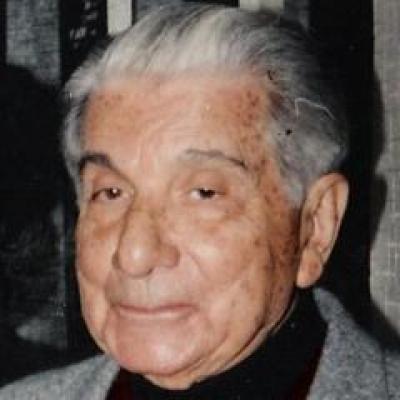
Augusto Roa Bastos was a notable Writer. The story of Augusto Roa Bastos began on 13 June 1917 in Asunción, Paraguay. The legacy of Augusto Roa Bastos continues today, following their passing on 26 April 2005 in Asunción, Paraguay.
Augusto Roa Bastos (13 June 1917 – 26 April 2005) was a Paraguayan novelist and short story writer. As a teenager he fought in the Chaco War between Paraguay and Bolivia , and he later worked as a journalist, screenwriter and professor. He is best known for his complex novel Yo el Supremo ( I the Supreme ) and for winning the Premio Miguel de Cervantes in 1989, Spanish literature's most prestigious prize. Yo el Supremo explores the dictations and inner thoughts of José Gaspar Rodríguez de Francia , the eccentric dictator of Paraguay who ruled with an iron fist, from 1814 until his death in 1840.
Philosophical Views and Reflections
Hijo de hombre builds upon a system of Christian metaphors as part of the Neobaroque concept of Magic Realism , in order to examine the pain of being Paraguayan. This novel contrasts two figures: Miguel Vera and Cristóbal Jara. Vera narrates the odd chapters, although he might also be the narrator of all nine chapters (this is unclear). He is a well-to-do and educated romantic supporter of revolution, who is unable to take real action to support his ideals and in the end betrays them (not unlike Judas). Jara, on the other hand, is an uneducated "son of man" who becomes a Christ-like leader for Paraguayan people through action and strength of character. Although it was a massive critical success, Roa Bastos remained dissatisfied with the work for a number reasons. It was fourteen years before he published another novel.
Even before Yo el Supremo , Roa Bastos was considered part of "the pantheon of great writers" by some critics due to Hijo de hombre . However, it was the former work that cemented his place as a significant literary figure. According to Juan Manuel Marcos, Yo el Supremo "anticipates many of the post-boom writing techniques" such as "the carnivalization of historical discourse, transtextualization, and parody". Mexican literary great Carlos Fuentes has called Yo el Supremo one of the milestones in Latin American literature. While his reputation rests on his novels, Roa Bastos's achievements in film, creative writing, and journalism add further substance to his legacy.