Fish without wine is like egg without salt.
Of all the items on the menu, soup is that which exacts the most delicate perfection and the strictest attention.
Good food is the foundation of genuine happiness.
So long as people don't know how to eat they will not have good cooks.
Rice is the best, the most nutritive and unquestionably the most widespread staple in the world.
Soup puts the heart at ease, calms down the violence of hunger, eliminates the tension of the day, and awakens and refines the appetite.
Indeed, stock is everything in cooking. Without it, nothing can be done.
People who do not accept the new, grow old very quickly.
The greatest dishes are very simple.
Above all, keep it simple.
Good food is the basis of true happiness
The workman mindful of success, therefore, will naturally direct his attention to the faultless preparation of his stock, and in order to achieve this result, he will find it necessary not merely to make use of the freshest and finest goods, but also to exercise the most scrupulous care in their preparation, for, in cooking, care is half the battle.
Original, in French: La bonne cuisine est la base du véritable bonheur. English: Good food is the foundation of genuine happiness.
Author details
Auguste Escoffier: Biography and Life Work
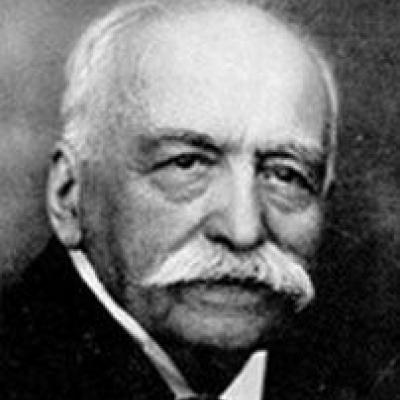
Auguste Escoffier was a notable Chef. The story of Auguste Escoffier began on 28 October 1846 in Villeneuve-Loubet, Kingdom of France. The legacy of Auguste Escoffier continues today, following their passing on 12 February 1935 in Monte Carlo, Principality of Monaco.
Georges Auguste Escoffier ( French: [ʒɔʁʒ(ə) oɡyst(ə) ɛskɔfje] ; 28 October 1846 – 12 February 1935) was a French chef , restaurateur and culinary writer who popularised and updated traditional French cooking methods. Much of Escoffier's technique was based on that of Marie-Antoine Carême , one of the codifiers of French haute cuisine ; Escoffier's achievement was to simplify and modernise Carême's elaborate and ornate style. In particular, he codified the recipes for the five mother sauces . Referred to by the French press as roi des cuisiniers et cuisinier des rois ("king of chefs and chef of kings" —also previously said of Carême), Escoffier was a preeminent figure in London and Paris during the 1890s and the early part of the 20th century.
Legacy and Personal Influence
Personally, Auguste Escoffier was married to Delphine Daffis, ; died.
Philosophical Views and Reflections
Escoffier created many famous dishes at the Savoy. In 1893, he invented the pêche Melba in honour of the Australian singer Nellie Melba , and in 1897, Melba toast . Other Escoffier creations, famous in their time, were the bombe Néro (a flaming ice-cream), fraises à la Sarah Bernhardt (for Sarah Bernhardt , strawberries with pineapple and Curaçao sorbet), baisers de Vierge (meringue with vanilla cream and crystallised white rose and violet petals) and suprêmes de volaille Jeannette (a cold jellied chicken breast with foie gras). He also created salad Réjane , after Gabrielle Réjane , and (although this is disputed) tournedos Rossini , named for Gioachino Rossini .
Escoffier married Delphine Daffis on 28 August 1878. She has been described as "a French Poet of some distinction and a member of the Academy". Escoffier apparently won her hand in a gamble with her father, publisher Paul Daffis, over a game of billiards . They had three children, Paul, Daniel (who was killed in World War I ), and Germaine. She died on 6 February 1935. : 99, 272