The Dance can, with the aid of music, rise to the heights of poetry. On the other hand, through an excess of gymnastics it can also degenerate into buffoonery. So-called "difficult" feats can be executed by countless adepts, but the appearance of ease is achieved only by the chosen few.
It is not so much upon the number of exercises, as the care with which they are done, that progreses and skill depend.
The Dance is an art because it demands vocation, knowledge, and ability.
The height of artistic skill is to know how to conceal the mechanical effort and strain beneath harmonious calm.
The beauty to which the Dance ought to aspire
Mannerism is not character, and affectation is the avowed enemy of grace. Every dancer ought to regard his laborious art as a link in the chain of beauty, as a useful ornament for the stage, and this, in turn, as an important element in the spiritual development of nations.
It is a fine art because it strives for an ideal, not only in plastic but also in lyrical respect.
The beautiful always retains the freshness of novelty, while the astonishing soon grow tiresome.
The art of Mime encompasses all the feelings of the soul. The Dance, on the other hand, is essentially an expression of joy, a desire to follow the rhythms of the music.
The beauty to which the Dance ought to aspire is not dependent upon taste or pleasure, but is founded on the immutable laws of Nature.
Joy is a strength; intoxication, a weakness.
Author details
August Bournonville: Biography and Life Work
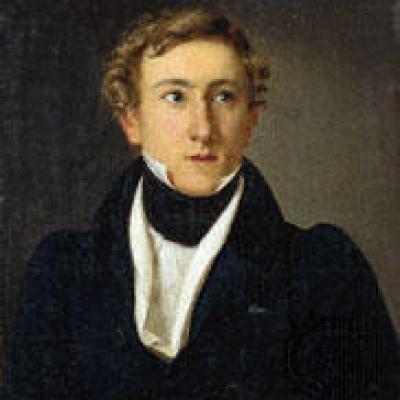
August Bournonville was a notable Ballet Master. The story of August Bournonville began on 21 August 1805 in Copenhagen, Denmark. The legacy of August Bournonville continues today, following their passing on 30 November 1879 in Copenhagen, Denmark.
August Bournonville (21 August 1805 – 30 November 1879) was a Danish ballet master and choreographer . He was the son of Antoine Bournonville , a dancer and choreographer trained under the French choreographer, Jean Georges Noverre , and the nephew of Julie Alix de la Fay , née Bournonville, of the Royal Swedish Ballet .
Legacy and Personal Influence
Personally, August Bournonville was married to Helena Fredrika Håkansson. Historically, their work is best remembered for Bournonville School.
Philosophical Views and Reflections
On 2 October 1813, Bournonville made his first stage appearance in a small part as the son of a Viking king in Galeotti's Lagertha , the first ballet on a Nordic theme. Less than a year later, he received his first personal applause for dancing a Hungarian solo at the Court Theatre. In addition to dance, Bournonville was a voracious reader, learned French at home, played the violin, sang in a boy soprano voice, and studied declamation with the actors Michael Rosing , Lindgreen, and Frydensdahl. His many talents were brought together on the Queen's birthday, 29 October 1817, when as a twelve-year-old he played the role of Adonia to royal acclaim in a music-drama, Solomon's Judgment and sang a romance, "The Mother with Her Drooping Wings".
Bournonville's work remains an important link with earlier traditions. He resisted many of the excesses of the romantic era ballets in his work. He is noted for his egalitarian choreography, which gave equal emphasis to both male and female roles, at a time when European ballet emphasized the ballerina. Many of his contemporaries explored the extremes of human emotion, while Bournonville, using enthusiastic footwork and fluid phrases in his work, portrayed a more balanced human nature.