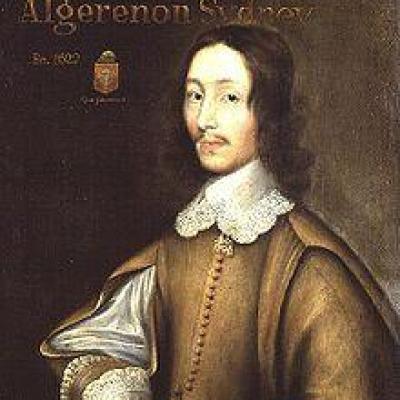
There may be a hundred thousand men in an army, who are all equally free; but they only are naturally most fit to be commanders or leaders, who most excel in the virtues required for the right performance of those offices.
The only ends for which governments are constituted, and obedience rendered to them, are the obtaining of and protection; and they who cannot provide for both give the people a right of taking such ways as best please themselves, in order to their own safety.
No right can come by conquest, unless there were a right of making that conquest.
I will believe in the right of one man to govern a nation despotically when I find a man born unto the world with boots and spurs, and a nation with saddles on their backs.
Tis hard to comprehend how one man can come to be master of many, equal to himself in right, unless it be by consent or by force.
Everyone sees they cannot well live asunder, nor many together, without some rule to which all must submit.
If the public safety be provided, liberty and propriety secured, justice administered, virtue encouraged, vice suppressed, and the true interest of the nation advanced, the ends of government are accomplished . . .
For violence or fraud can create no right.
God leaves to Man the choice of Forms in Government; and those who constitute one Form, may abrogate it.
Machiavel, discoursing on these matters, finds virtue to be so essentially necessary to the establishment and preservation of liberty, that he thinks it impossible for a corrupted people to set up a good government, or for a tyranny to be introduced if they be virtuous; and makes this conclusion, 'That where the matter (that is, the body of the people) is not corrupted, tumults and disorders do not hurt; and where it is corrupted, good laws do no good:' which being confirmed by reason and experience, I think no wise man has ever contradicted him.
That which is not just, is not Law; and that which is not Law, ought not to be obeyed.
Liars need to have good memories.
Many things are unknown to the wisest, and the best men can never wholly divest themselves of passions and affections... nothing can or ought to be permanent but that which is perfect.
It is not necessary to light a candle to the sun
[L]iberty cannot be preserved, if the manners of the people are corrupted . . .
[A]ll popular and well-mixed governments [republics] . . . are ever established by wise and good men, and can never be upheld otherwise than by virtue: The worst men always conspiring against them, they must fall, if the best have not power to preserve them. . . . [and] unless they be preserved in a great measure free from vices . . . .
If his Majesty is resolved to have my head, he may make a whistle of my arse if he pleases.
[I]f vice and corruption prevail, liberty cannot subsist; but if virtue have the advantage, arbitrary power cannot be established.
Laws and constitutions ought to be weighed... to constitute that which is most conducing to the establishment of justice and liberty.
Nay, all laws must fall, human societies that subsist by them be dissolved, and all innocent persons be exposed to the violence of the most wicked, if men might not justly defend themselves against injustice by their own natural right, when the ways prescribed by publick authority cannot be taken.
Men lived like fishes; the great ones devoured the small.
Swords were given to men, that none might be Slaves, but such as know not how to use them.
Who will wear a shoe that hurts him, because the shoe-maker tells him 'tis well made?
We cannot distinguish truth from falsehood, right from wrong, or know what obedience we owe to the magistrate, or what we may justly expect from him, unless we know what he is, why he is, and by whom he is made to be what he is.... I cannot know how to obey unless I know in what, and to whom; nor in what unless I know what ought to be commanded; nor what ought to be commanded unless I understand the original right of the commander, which is the great arcanum.
Fruits are always of the same nature with the seeds and roots from which they come, and trees are known by the fruits they bear: as a man begets a man, and a beast a beast, that society of men which constitutes a government upon the foundation of justice, virtue, and the common good, will always have men to promote those ends; and that which intends the advancement of one man's desire and vanity, will abound in those that will foment them.
That is the best Government, which best provides for war.