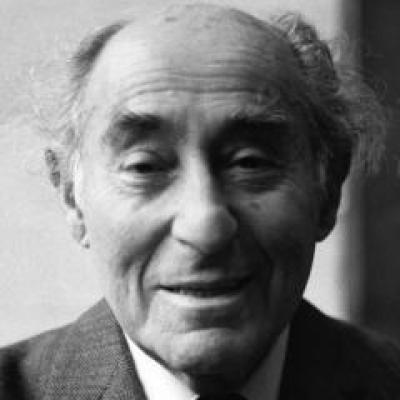
My style hasn't changed much in all these sixty years. I still use, most of the time, existing light and try not to push people around. I have to be as much a diplomat as a photographer. People don't often take me seriously because I carry so little equipment and make so little fuss... I never carried a lot of equipment. My motto has always been, "Keep it simple".
In New York’s Times Square a white-clad girl clutches her purse and skirt as an uninhibited sailor plants his lips squarely on hers.
We are only beginning to learn what to say in a photograph. The world we live in is a succession of fleeting moments, any one of which might say something significant.
I enjoy traveling and recording far-away places and people with my camera. But I also find it wonderfully rewarding to see what I can discover outside my own window. You only need to study the scene with the eyes of a photographer.
I always prefer photographing in available light – or Rembrandt-light I like to call it – so you get the natural modulations of the face. It makes a more alive, real, and flattering portrait.
I don't like to work with assistants. I'm already one too many; the camera alone would be enough.
I don’t use an exposure meter. My personal advice is: Spend the money you would put into such an instrument for film. Buy yards of film, miles of it. Buy all the film you can get your hands on. And then experiment with it.That is the only way to be successful in photography. Test, try, experiment, feel your way along. It is the experience, not technique, which counts in camera work first of all. If you get the feel of photography, you can take fifteen pictures while one of your opponents is trying out his exposure meter.
I want to be a mouse in a mousehole.
I see pictures all the time. I could stay for hours and watch a raindrop.
Retire? Retire from What? Life? I will only retire when I am dead!
When I have a camera in my hand, I know no fear.
Yes, I sold buttons to earn living. But I took pictures to keep on living. Pictures are my life – as necessary as eating or breathing.
The way I would describe a pictorial is that it is a picture that makes everybody say ‘Aaaaah,’ with five vowels when they see it. It is something you would like to hang on the wall. The french word ‘photogenique’ defines it better than anything in English. It is a picture which must have quality, drama, and it must, in addition, be as good technically as you can possible make it.
I will be remembered when I'm in heaven. People won't remember my name, but they will know the photographer who did that picture of that nurse being kissed by the sailor at the end of World War II. Everybody remembers that.
Once the amateur's naive approach and humble willingness to learn fades away, the creative spirit of good photography dies with it. Every professional should remain always in his heart an amateur.
It's important to understand it's OK to control the subject. If most editorial stories were photographed just as they are, editors would end up throwing most in the waste basket. You have to work hard at making an editorial picture. You need to re-stage things, rearrange things so that they work for the story, with truth and without lying.
I dream that someday the step between my mind and my finger will no longer be needed. And that simply by blinking my eyes, I shall make pictures. Then, I think, I shall really have become a photographer.
When I photographed Marilyn Monroe, I mixed up my cameras - one had black-and-white film, the other color. I took many pictures. Only two color ones came out all right. My favorite picture of Marilyn hangs always on the wall in my office. It was taken on the little patio of her Hollywood house.
Photographers don't need to be aggressive. Some are. Henry Benson is aggressive - but then he's from Fleet Street. If you can talk to people, you don't need to push people around.
Never boss people around. It's more important to click with people than to click the shutter.
People will never understand the patience a photographer requires to make a great photograph, all they see is the end result. I can stand in front of a leaf with a dew drop, or a rain drop, and stay there for ages just waiting for the right moment. Sure, people think I'm crazy, but who cares? I see more than they do!
Today's photographers think differently. Many can't see real light anymore. They think only in terms of strobe - sure, it all looks beautiful but it's not really seeing. If you have the eyes to see it, the nuances of light are already there on the subject's face. If your thinking is confined to strobe light sources, your palette becomes very mean - which is the reason I photograph only in available light.
The most important thing... is not clicking the shutter... it is clicking with the subject.
All photographers have to do, is find and catch the story-telling moment.
I seldom think when I take a picture. My eyes and fingers react - click. But first, it's most important to decide on the angle at which your photograph is to be taken.
The important thing is not the camera but the eye.
In a photograph a person’s eyes tell much, sometimes they tell all.
Another picture I hope to be remembered by is this one of the drum major rehearsing at the University of Michigan. It was early in this morning, and I saw a little boy running after him, all the faculty children in the playing field ran after the boy, and I ran after them. This is a completely spontaneous, unstaged picture.
With photography, everything is in the eye and these days I feel young photographers are missing the point a bit. People always ask about cameras but it doesn't matter what camera you have. You can have the most modern camera in the world but if you don't have an eye, the camera is worthless. Young people know more about modern cameras and lighting than I do. When I started out in photography I didn't own an exposure meter - I couldn't , they didn't exist! I had to guess.
I have to be as much diplomat as a photographer.